“What if we made a dungeon system where players build their own and raid everyone else's?” That one sentence is where the long road to Trickster Trove began. But how do you keep it fair for everyone? How do you deal with the problems of asymmetric gameplay?
Our first prototypes put dungeons on a grid. Identical base modules, uniform corridors, easy to develop. And... boring to play. In a way, that repetition was part of the trick: without a map, getting lost in identical corridors is genuinely harder. But was that artificial difficulty worth forcing players to run through monotonous hallways?
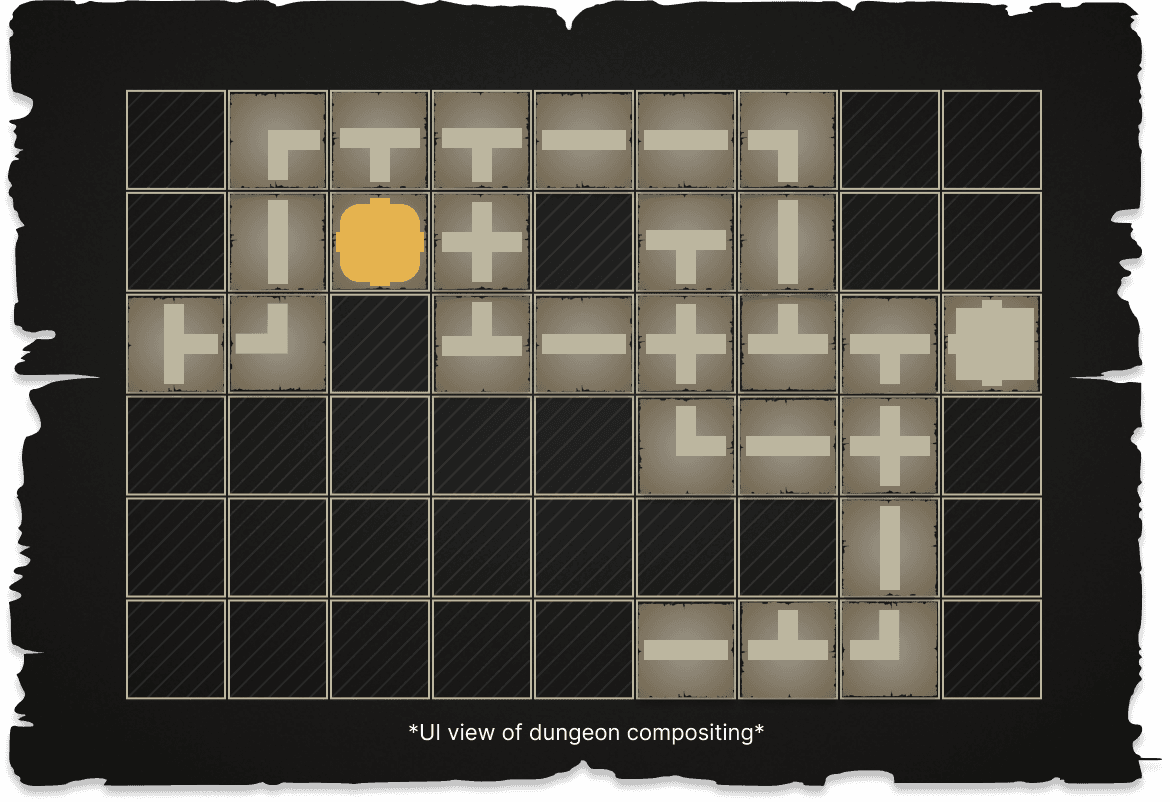
We decided it was not. What confuses a raider should not be identical walls. It should be another player's decisions.
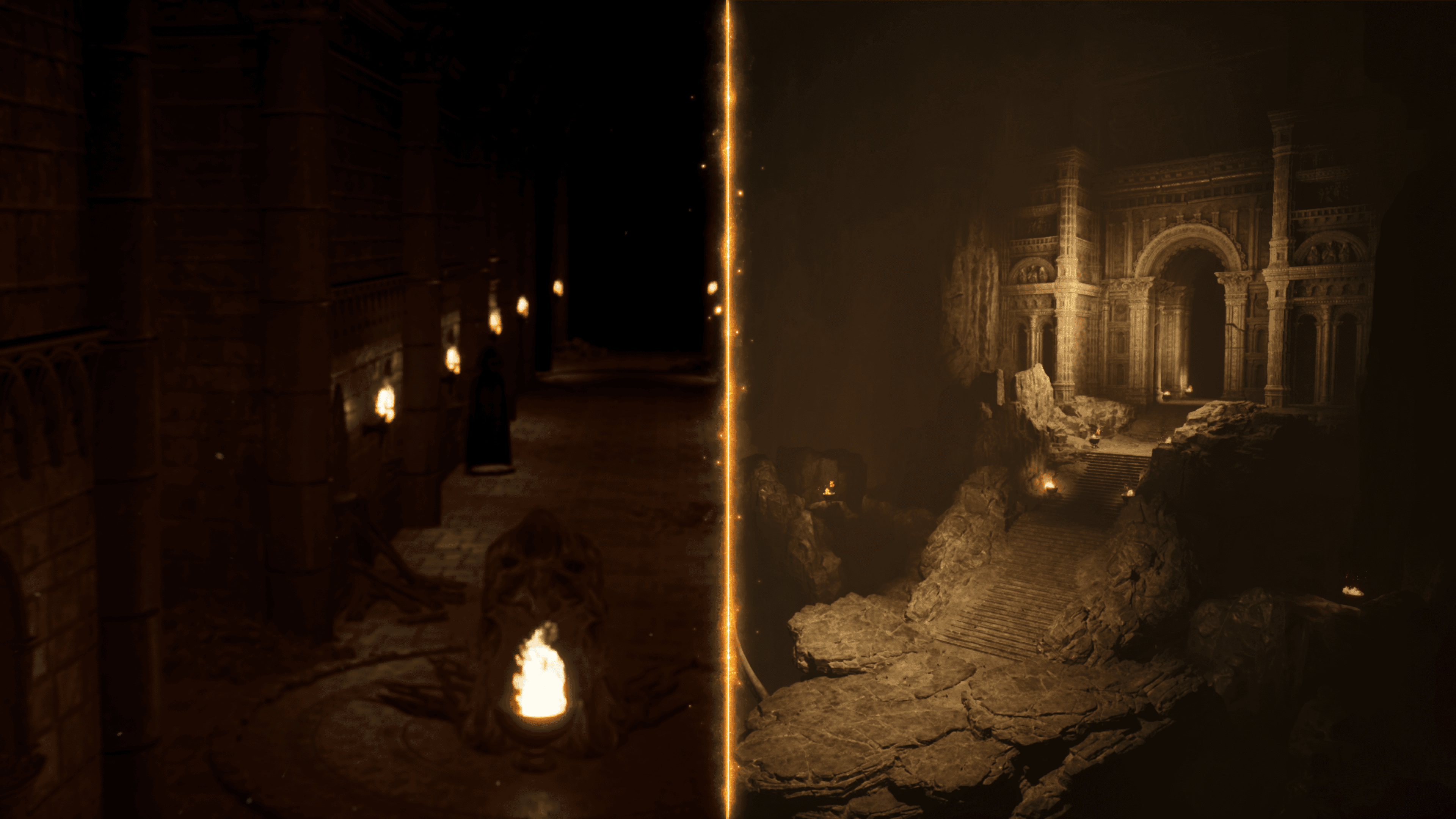
That is where modules came from. Instead of a grid of square rooms, the builder gets pre-made locations, each with its own atmosphere, shape and character: a cramped stone cave with a stepped descent, a dark village with back alleys and attics, multi-level ruins where half the places are hidden from a first glance. A module is interesting on its own, so the builder does not spend hours placing walls. Their job is different: arrange these locations so the raider regrets showing up.
Building
You see your dungeon from above, like a map. The Entrance and the Treasury are always there: the Entrance stays put, the Treasury can be moved but never removed. Every other module you buy, drop onto the field, rotate and move around however you like.
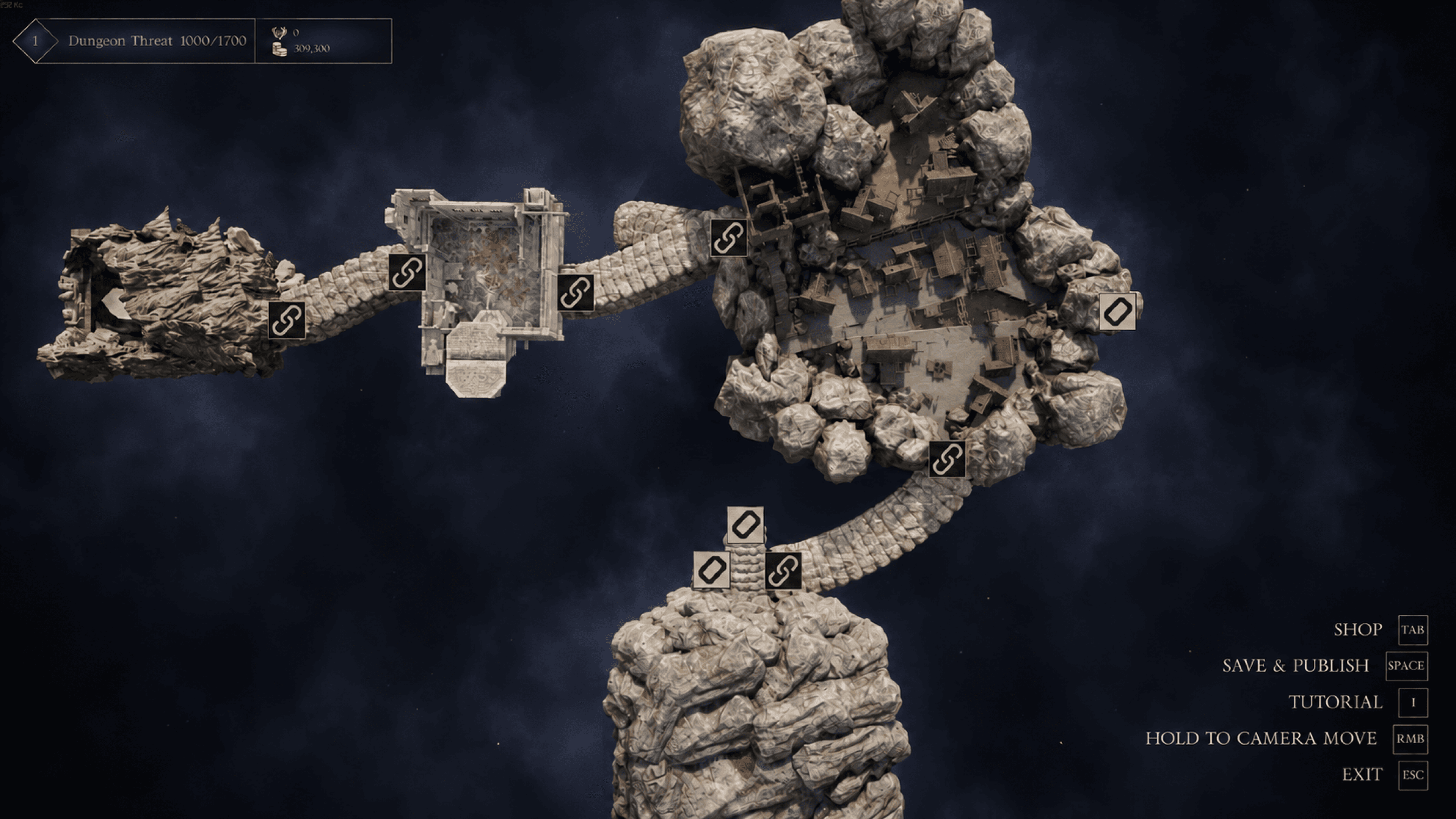
You do not draw corridors by hand. Pick an exit on one module and an exit on another, and the tunnel generates itself: it routes around other modules, can create crossings, and on height differences it decides where to put a gentle slope, where stairs go, and where a ladder is needed. Every dungeon ends up with its own network of connections, and no two look alike.
Verification
This brings us back to fairness. A builder's freedom without rules very quickly turns into a dungeon nobody can finish. So every change is validated, and the dungeon is only saved when everything checks out. A module not connected to the rest? The system asks you to connect it. Modules too close or too far from each other? Also a stop.
Already at the level design stage we build every module so that whichever exit a raider enters from, they can reach any other. No dead ends that exist purely to block a run. The Entrance module must also have a path to the Trove, otherwise you cannot finish the build and save the dungeon. We decided it is better for players to rely on a system that guarantees fair competition.
Mobs and traps
Select a module, press T, and you teleport inside. Now you see the space through the raider's eyes: where they come in, where they look first, where they will want to cut a corner.
The stepped cave is perfect for ranged mobs. The village alleys are for meeting a raider up close. Tall stairs give the raider a good overview, so that is where you place something they will not notice.
With traps we deliberately did not go the “more damage” route. We are more interested in traps that steer behaviour: play on greed, force you to hurry, herd you into a spot where a mob is already waiting. Every trap has a visible tell, a trigger condition and a counter. A careful raider must always have a chance. A careless one pays for rushing.
Each module has a set number of slots for traps and mobs. You can put a mob of the matching rarity into a slot, or spend two Common slots on one Uncommon cell and place a more dangerous monster there. By building synergies between traps and adding patrols to your monsters, you design your dungeon's security system yourself. And if it falls, you can review exactly how the raider managed to beat you in this battle of cunning and wits.
What confuses a raider should not be identical walls. It should be another player's decisions.
And one more thing before we go. A little hint about our new mob.